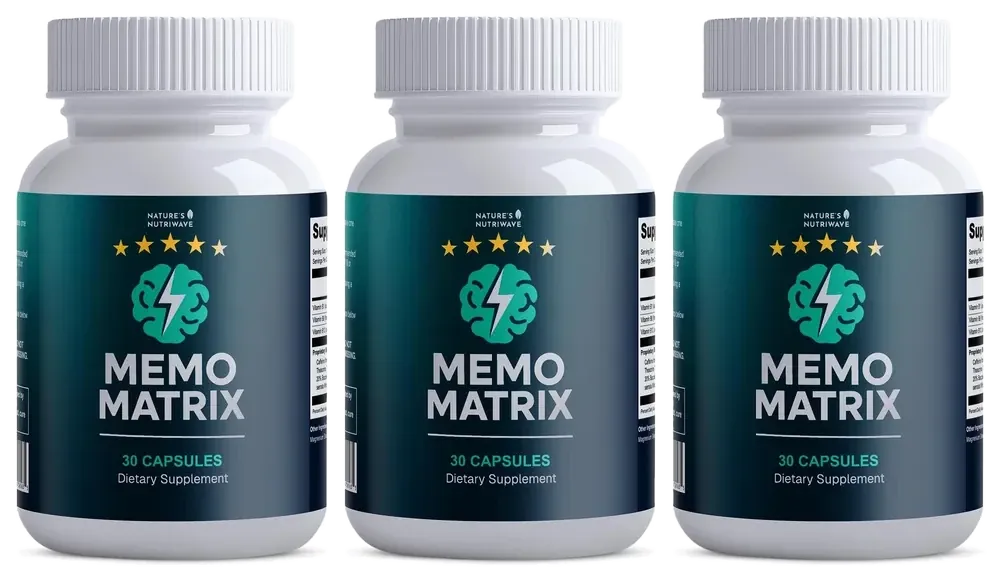
Caffeine in Memory Supplements: Reading the MemoMatrix Blend
Quick answerThe second MemoMatrix panel lists caffeine from green coffee bean, plus theacrine and theobromine, inside a 151 mg blend. The caffeine amount is not printed. The FDA says about 400 mg a day is not generally linked to danger in healthy adults, but sensitivity varies. Count every source, and ask a doctor if you have heart rhythm, sleep or anxiety concerns.
- 60-day satisfaction window
- Free US shipping on 3 and 6 bottles

Which MemoMatrix panel lists caffeine?
Caffeine appears on one of the three MemoMatrix ingredient lists. It is on the second Supplement Facts image, the one with a 1-capsule serving. The full label and the sales page do not name it.
On that second panel, a 151 mg proprietary blend holds seven ingredients. Three of them are caffeine or close stimulant relatives of it. The table sorts them out.
| Blend item | What it is | Amount printed? |
|---|---|---|
| Caffeine from green coffee bean | The familiar stimulant in coffee and tea | No |
| Theacrine | A compound built much like caffeine | No |
| Theobromine | A mild stimulant found in cocoa | No |
| L-tyrosine | An amino acid; not reviewed here | No |
| Bacopa extract (20% bacosides) | Herb also on the full label | No |
| Rhodiola root | Herb also on the full label | No |
| Huperzia serrata extract (1% huperzine-A) | Source of huperzine A | No |
Check your own bottle before you read further. If the panel shows 2 capsules and five lines with amounts, it has no caffeine listed. If it shows 1 capsule and a 151 mg blend, it does. Our which formula page explains all three lists.
What are caffeine, theacrine and theobromine?
Caffeine is the most familiar of the three. It keeps you alert by blocking a brain signal that builds up as you get tired. That is why it can help focus and also why it can keep you awake.
Theacrine is a close chemical cousin of caffeine. It is sold in energy and focus products as a stimulant. Research on it in people is small, and we did not review it in depth.
Theobromine comes mostly from cocoa. It is a milder stimulant, and chocolate is the main place most people meet it. Together, these three point the blend toward a stimulant effect.
Caffeine
From green coffee bean on this panel. The main stimulant. Amount not printed.
Theacrine
Built much like caffeine. Sold as a stimulant. Amount not printed.
Theobromine
The cocoa stimulant. Milder than caffeine. Amount not printed.
Our caffeine section on the ingredients page keeps a short summary of the same facts.
How much caffeine is in a capsule?
The caffeine amount is unknown, and it cannot be worked out from the label. The whole blend weighs 151 mg. Seven ingredients share it, and the panel gives no split.
That gives a hard ceiling but no real number. The caffeine cannot be more than 151 mg a capsule, since that is the entire blend. It is very likely much less, since six other items also need room.
- 151 mgWhole blend, all seven items
- 0Single amounts printed in the blend
- 400 mgFDA daily figure for healthy adults
For planning, assume the capsule adds some caffeine and leave room for it. If you want a real number, ask the seller in writing for the caffeine per capsule. A clear answer is a good sign; a vague one is useful to know too.
What does the FDA say about 400 mg a day?
The FDA says that for healthy adults, 400 mg of caffeine a day is not generally linked to dangerous effects (FDA, How much caffeine is too much?). It is a guide figure, not a target. The same article notes that people differ in how strongly they feel caffeine and how fast they clear it.
Some medicines and health conditions call for less caffeine. That is a question for your doctor or pharmacist. Many people also find that a cup that once felt fine starts to disturb their sleep as the years go by.
Who should ask before any caffeine product
Expecting or breastfeeding mothers, anyone under 18 and anyone already under care for a condition belong on the ask-first list. The full MemoMatrix label prints this same advice.
How do you count all your caffeine sources?
The safest habit is to count every source in a normal day. Caffeine hides in more places than coffee. The table gives rough ballpark ranges for common drinks, and the labels on cans and pill packs often print the real figure.
| Source | Rough general estimate | Where to check |
|---|---|---|
| Brewed coffee, 8 oz | Roughly 80 to 160 mg | Varies by bean, brew and cup size |
| Green or black tea, 8 oz | Roughly 25 to 50 mg | Varies by tea and steeping time |
| Caffeinated soda, 12 oz | Roughly 25 to 80 mg | Often printed on the can |
| Energy drink, 8 oz | Roughly 30 to 160 mg, sometimes more | Read the can label |
| Chocolate and cocoa | Small amounts, plus theobromine | Darker chocolate has more |
| Some pain relievers | Varies | Check the Drug Facts label |
| MemoMatrix second panel, 1 capsule | Not printed | Ask the seller in writing |
Add up a typical day on paper. Then add a margin for the capsule, since its amount is unknown. If you are near the 400 mg figure already, cut back elsewhere or skip a caffeine-containing product.
Who should be careful with a stimulant blend?
Three groups of people should go slowly with any stimulant blend. These are general cautions, not a diagnosis. Your own doctor knows your history.
- 01
Light or broken sleep
Caffeine late in the day can delay sleep and make it lighter. Huperzine A, in the same blend, also lists insomnia among its side effects (MSKCC, Huperzia serrata).
- 02
Heart rhythm concerns
Some people feel a racing or skipped beat after caffeine. If you have a rhythm problem or take heart medicine, ask your doctor before any stimulant product.
- 03
Anxiety or jitters
Caffeine can make nervousness, shakiness or a racing mind worse. If you already live with anxiety, a stimulant-free label may suit you better.
- 04
Other medicines
Rhodiola, also in the blend, may interact with stimulants and with antidepressants (MSKCC, Rhodiola). Bring the panel to the pharmacist.
When not to wait
Chest pain, fainting, or sudden confusion or trouble speaking needs emergency care. Call 911 right away and note the time the signs started.
What time of day makes sense for a caffeine panel?
Take it early if your panel lists caffeine
The second panel lists a 1-capsule serving. The full label suggests 2 capsules with 8 oz of water, 20-30 minutes before a meal. Morning use keeps any stimulant far from bedtime.
The full label lists 100 mg of L-theanine, an amino acid found in tea. It is not a stimulant. Studies of L-theanine mostly used 200 mg (Gerolymos et al., 2026). Both panels are retyped on our Supplement Facts page.
Photo: green tea leaves, matcha powder and a cup of tea. Illustration of a tea source, not a capsule ingredient claim.
Honest note: alert is not the same as remembering
No study has tested MemoMatrix, with or without caffeine. A small dose of caffeine can make a person feel more alert for a few hours. That is not the same as better memory, and it should not be read that way.
Supplements have no proof of preventing dementia (NCCIH, Supplements for cognitive function). If memory changes are new or getting in the way of daily life, a doctor visit comes before any product (NIA, Memory problems and aging). Our side effects page lists the other cautions for each list.
Caffeine in memory supplements: common questions
Which MemoMatrix list includes a stimulant?
Only one of its three ingredient lists names caffeine. The second Supplement Facts panel lists caffeine from green coffee bean in a blend, while the full label and the sales page do not.
Can I find the milligrams of caffeine on the MemoMatrix panel?
The amount is not printed. The whole blend is 151 mg and holds seven ingredients, so the caffeine share is unknown.
What is theacrine?
Theacrine is a compound with a structure close to caffeine. It is sold as a stimulant in focus and energy products, and the panel gives no amount for it.
Is theobromine a stimulant?
It is a mild one. Theobromine is the main stimulant in cocoa and chocolate, and it is weaker than caffeine.
How much caffeine a day is safe?
For healthy adults, the FDA says 400 mg a day is not generally linked to dangerous effects. People react differently, and some medicines and conditions call for less.
Can caffeine pills cause a fast heartbeat?
Caffeine can make some people feel a racing or pounding heart. If you have a heart rhythm problem or take heart medicine, ask your doctor before adding any new stimulant.
Do memory supplements with caffeine affect sleep?
They can, especially if taken late in the day. Take any caffeine product in the morning, and watch your sleep for the first two weeks.
Does green coffee bean extract have caffeine?
Yes, green coffee beans contain caffeine. On this panel the caffeine is listed as coming from green coffee bean.
Is the L-theanine on the full label a hidden stimulant?
No. L-theanine is an amino acid from tea and is not a stimulant. The full label lists 100 mg of L-theanine and no caffeine.
Know which MemoMatrix panel you have?
The full MemoMatrix label lists no caffeine; a second panel does. Match the Supplement Facts on your bottle, count your daily caffeine, and order only once the numbers make sense for you.