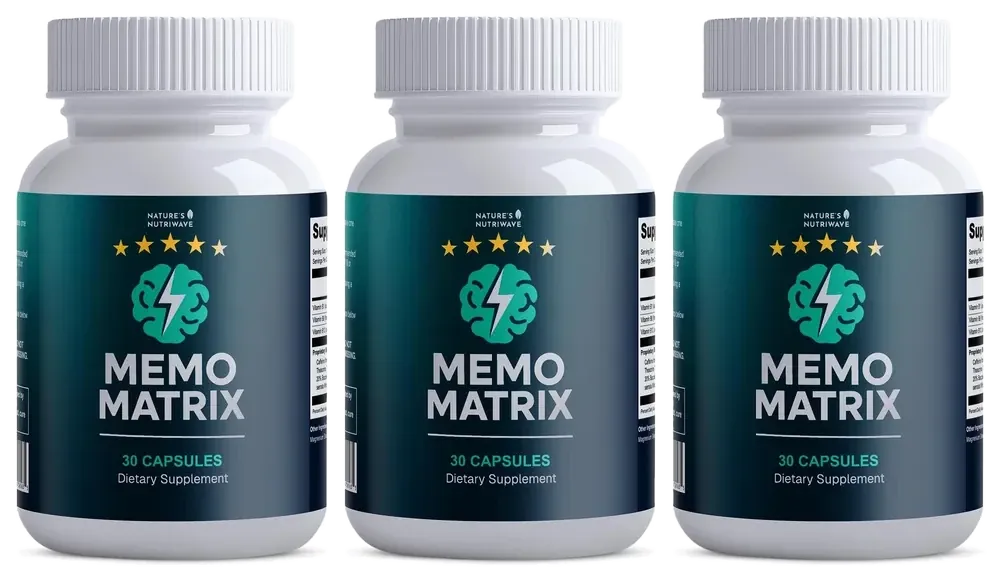
MemoMatrix Testing and Quality: What the Badges Prove and What They Do Not
Quick answerMemoMatrix shows GMP, FDA-registered facility, Made in USA and 60-day badges, but no certificate, lab report or facility name has been published. A registered facility is not an FDA-approved product, because the FDA does not approve supplements before sale. The label says “Made in the USA with globally sourced ingredients.” Ask for a lab report that names your formula version.
- 60-day satisfaction window
- Free US shipping on 3 and 6 bottles
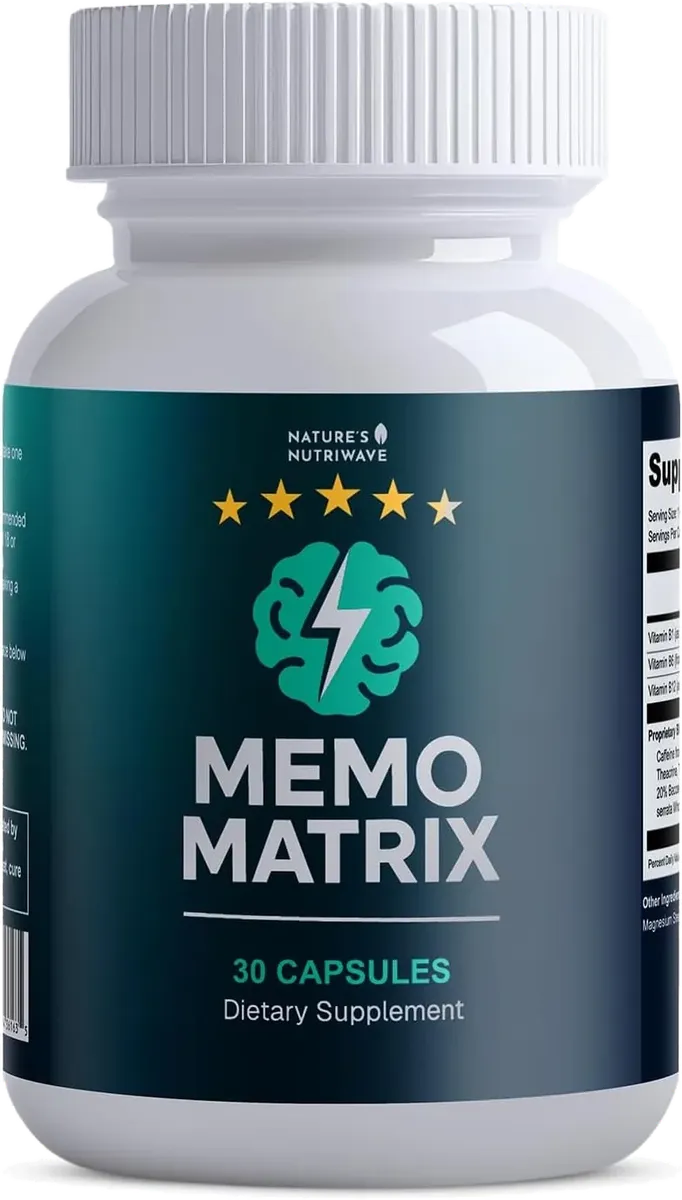
What quality evidence has MemoMatrix published?
Very little that you can check. The label and sales page carry quality statements, and the brand pack lists a lot number and a certificate reference. No lab report, facility name or certificate number has been released.
That does not mean the capsules are poor. It means the quality claims rest on the brand's word for now. The table lists each claim and what stands behind it.
| Claim | Where it appears | What we found |
|---|---|---|
| “Manufactured in an FDA registered facility” | Full label | Facility not named; registration is not product approval |
| “FDA-registered and GMP-certified facility” | Sales page | No certifier, certificate number or facility named |
| “Made in the USA with globally sourced ingredients” | Full label | Factory and ingredient sources not named |
| “Contains No Allergens” | Full label | A label statement; no allergen test report published |
| Certificate of analysis MEM-3867-26-ME | Brand pack | Reference only; no certificate document published |
| Lot MEM-26/ME-3867 | Brand pack | Reference only; not tied to a published test |
What do the four badges on the brand graphics mean?
They are brand artwork, not certificates. Each one points to a real idea, like good manufacturing practice or a refund window. None comes with a document you can look up.
A brand badge. The sales page says “GMP-certified facility”, but no facility or certificate number is published.
A brand badge, echoed on the label. A facility listing is not FDA approval of the product, and the facility is not named.
The label says “Made in the USA with globally sourced ingredients.” The factory is not named.
Refers to the sales page's 60-day money-back guarantee. It is a purchase policy, not a promise of results.
A badge can be useful as a prompt. It tells you which question to ask. If a seller says a facility is GMP certified, it is fair to ask who certified it and when.
Does “manufactured in an FDA registered facility” mean FDA approval?
No. Facility registration means a plant has listed itself with the FDA. It is not a review of any product made there. Federal law gives the agency no power to clear a supplement before it is sold (FDA, Q&A on Dietary Supplements).
So the label line tells you something about the building, not about the capsules. MemoMatrix has no FDA approval, and no supplement has one. Makers are responsible for the safety and labeling of their own products.
Watch for the word “approved”
If an ad or page calls a memory supplement “FDA-approved,” treat that as a red flag. The phrase does not apply to supplements.
US-made, foreign-sourced: what the origin line reveals
It tells you two things. The capsules were put together in the United States, and at least some of the ingredients came from other countries.
It does not name the factory or the countries. Herbs like bacopa, rhodiola and Panax ginseng are often grown abroad, so the wording is common for this kind of product. It is an honest phrase, but not a detailed one.
The label also names a distributor, not a maker: Memo Matrix, Largo, FL. A distributor sells under its name while another company may do the manufacturing.
Is there a certificate of analysis for MemoMatrix?
Not one that has been published. The brand pack gives the reference MEM-3867-26-ME and the lot MEM-26/ME-3867, and that is all. Without the document, we cannot say what was tested or what the results were.
A certificate of analysis, or CoA, is a lab report for one batch. A useful one is specific. The table shows what a complete one usually covers.
| Part of the report | What to look for |
|---|---|
| Product name and formula | Should match your panel: 2-capsule full label or 1-capsule panel |
| Lot number | Should match the code printed on your bottle |
| Lab name | Tells you who ran the tests and whether it is independent |
| Test date | Should be close to the production date of your lot |
| Identity | Confirms each herb or compound is what the label says |
| Strength | Measures amounts, for example bacopa or salidroside content |
| Contaminants | Heavy metals, microbes and similar limits, with the results |
| Signature | A named person at the lab who approved the report |
How do you ask for a CoA that names your formula version?
Ask in writing, and be specific. A request that names the lot and the formula version is harder to answer with a generic sheet.
A short message works well. For example: “Please send the certificate of analysis for my lot, code as printed on my bottle. My Supplement Facts panel lists 2 capsules per serving and the revision code REV.11/25. Please include the lab name and the test date.”
If your panel lists 1 capsule, say so instead. If the reply covers a different version, ask again. Keep every message with your order email.
Why does the formula version change what a test means?
Three ingredient lists circulate under one name. The full label lists five ingredients with amounts. A second panel lists B vitamins and a 151 mg blend with caffeine and huperzine A. The sales page lists eight items with no amounts.
A lab report only speaks for the formula it tested. A clean result for the 2-capsule label tells you nothing about a bottle with huperzine A inside. Our formula comparison shows all three lists.
Huperzine A matters most for people on memory medicines such as donepezil (MSKCC, Huperzia serrata). The huperzine A page explains why.
What can you check at home?
You cannot test capsules in a kitchen. You can still catch the most common problems on arrival in a few minutes.
Five checks on arrival
- The safety seal is whole before first use
- The Supplement Facts panel matches one of the known versions
- The lot code is printed and readable
- The capsules look dry, even and intact
- The bottle is kept cool, dry and out of the light
The batch verify page walks through each check, and the Supplement Facts page retypes the full label line by line.
Honest note: a clean lab report would show what is in the bottle, not whether it helps memory. No study of MemoMatrix has been published, and supplements are not proven to prevent dementia (NCCIH, Supplements for cognitive function).
Lab tests, seals and origin: MemoMatrix FAQ
Does the FDA vouch for MemoMatrix in any way?
No. Supplements need no FDA approval to go on sale. The MemoMatrix label says only that it was made in an FDA registered facility.
Is MemoMatrix made in a GMP-certified facility?
The sales page says so, but no facility name, certifier or certificate number is published. We list the claim as unverified.
Which country and factory produce MemoMatrix?
The label says “Made in the USA with globally sourced ingredients.” The factory is not named, and the countries the ingredients come from are not listed.
Has MemoMatrix been tested by a third-party lab?
We have not seen any outside lab results for it. The brand pack gives a certificate reference, MEM-3867-26-ME, without the document.
What is a certificate of analysis for a supplement?
It is a lab report for one batch. A useful one names the lab, the lot, the test date and results for identity, strength and contaminants.
How do I get a MemoMatrix certificate of analysis?
Ask the seller in writing, give your lot code and name your formula version. Email [email protected] or call the order desk at +1 (919) 991-9391.
Does the MemoMatrix 60-day badge mean it works?
No. The badge refers to the money-back guarantee on the sales page. It is a buying policy, not a promise of results.
Why does the formula version matter for a lab test?
Because three ingredient lists circulate under the MemoMatrix name. A report on the 2-capsule label would not cover a 1-capsule panel with caffeine and huperzine A.
Does “Contains No Allergens” on the MemoMatrix label mean it is safe for me?
It means the label declares no major food allergens. It does not cover herbal reactions or drug interactions, so ask your doctor if you take medicine.
Check MemoMatrix quality claims for yourself
Read the panel on your bottle, keep the lot code and ask for the lab report that matches it. The sales page offers a 60-day money-back guarantee, counted from the order date on the support page.