MemoMatrix Side Effects: What to Watch For and When to Ask
Quick answerReported side effects of the MemoMatrix ingredients are mostly mild.
They include stomach upset and nausea from bacopa, trouble sleeping from ginseng or rhodiola, and jitters from caffeine on one panel. Huperzine A may add to donepezil-type drugs and ginkgo may raise bleeding risk with blood thinners, so ask a doctor first if you take these.
- 60-day satisfaction window
- Free US shipping on 3 and 6 bottles
Why do side effects depend on which formula you have?
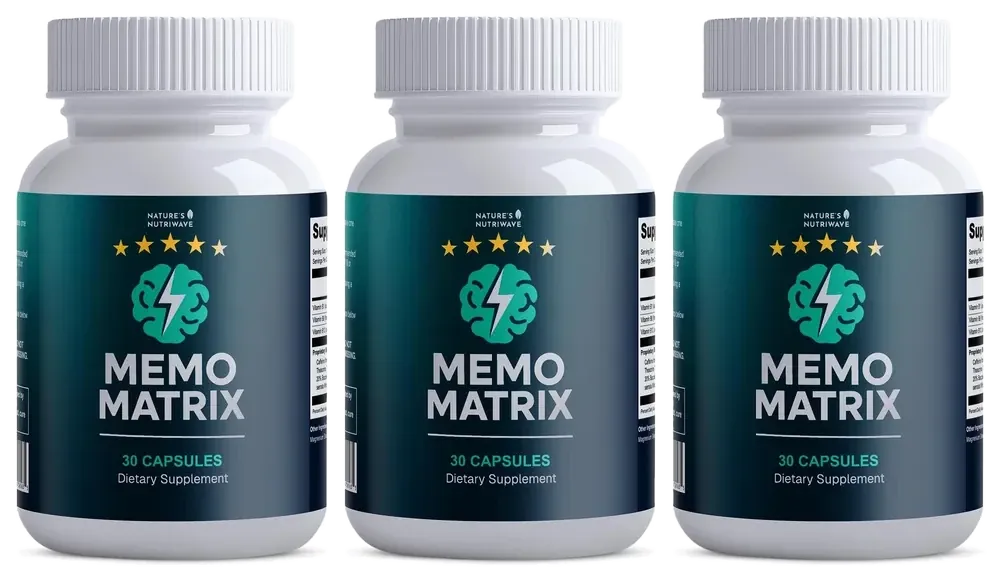
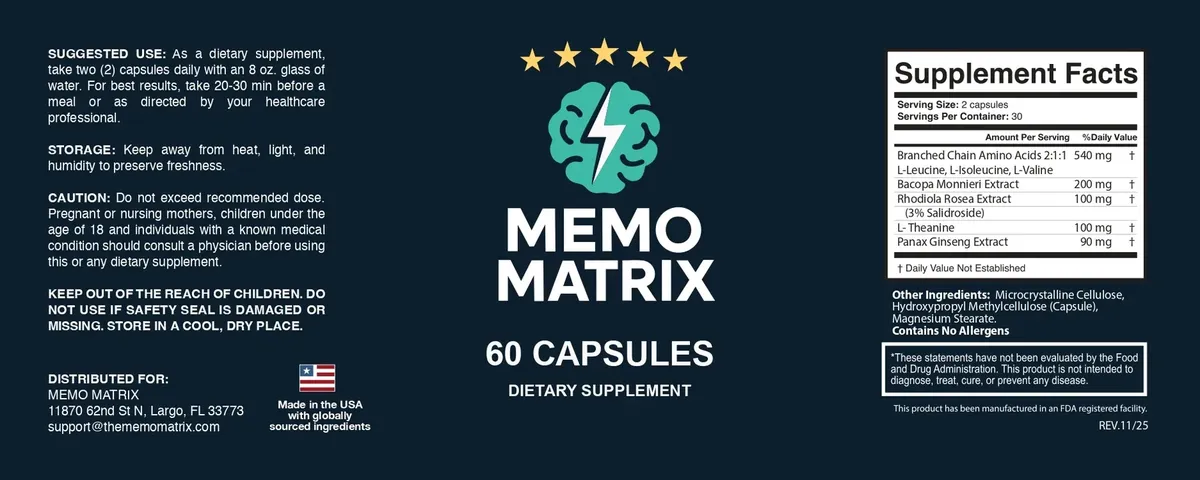
Three ingredient lists circulate under the MemoMatrix name. Each has a different set of ingredients, so each carries different risks. The panel on your bottle tells you which rows on this page apply to you.
Bacopa and rhodiola are on all three lists. Everything else depends on the version. The formula comparison page shows the three lists in full.
Full label (REV.11/25)
BCAAs, bacopa, rhodiola, L-theanine and Panax ginseng, every amount printed. No caffeine and no huperzine A.
Second panel
B1, B6, B12 and a 151 mg blend with caffeine, theacrine, theobromine, bacopa, rhodiola and huperzine A. Amounts inside the blend are not printed.
Sales page list
Bacopa, ginkgo, lion's mane, phosphatidylserine, rhodiola, alpha-GPC, huperzine A and L-theanine, with no amounts.
Ingredient by ingredient: what reactions are on record?
The table lists what trusted sources report for each ingredient on at least one list. Most effects are mild. None of these were measured in a study of the product itself.
| Ingredient | On which list | Reported side effects |
|---|---|---|
| Bacopa monnieri | All three | Stomach upset, nausea, cramps, more frequent stools (StatPearls, Bacopa) |
| Rhodiola rosea | All three | Dizziness, headache, trouble sleeping, dry mouth (NCCIH, Rhodiola) |
| Panax ginseng | Full label | Trouble sleeping is most common; may lower blood sugar and affect clotting (NCCIH, Asian Ginseng) |
| L-theanine | Full label, sales list | No side effects reported in studies; may add to sedatives (MSKCC, L-Theanine) |
| BCAAs | Full label | Not a concern at 540 mg in the sources we use; studies used 7-10 g (Blomstrand, 2006) |
| Huperzine A | Second panel, sales list | Nausea, dizziness, diarrhea, trouble sleeping (MSKCC, Huperzia serrata) |
| Caffeine, theacrine, theobromine | Second panel | Jitters, fast heartbeat, poor sleep in sensitive people; amount not printed (FDA, How much caffeine is too much?) |
| Vitamin B6 | Second panel | 8.5 mg is under the 100 mg upper limit; nerve damage reported at 1-6 g a day (NIH ODS, Vitamin B6) |
| Ginkgo biloba | Sales list | May raise bleeding risk with blood thinners (NCCIH, Ginkgo) |
| Alpha-GPC | Sales list | Stomach upset; long-term use linked to higher stroke risk in some research (WebMD, Alpha-GPC) |
Lion's mane has only small pilot trials behind it (Docherty et al., 2023). We found no source on phosphatidylserine we could verify, so it is not reviewed here. Ask your doctor about it.
Why is bacopa the most common cause of stomach trouble?
Bacopa is on every list, and its most common side effects are in the gut. StatPearls lists stomach upset, nausea, cramps and more frequent stools (StatPearls, Bacopa). These were seen at 300 to 450 mg a day in trials.
The full label lists 200 mg, so effects may be milder, though no one has tested that. If your stomach is upset, ask your pharmacist whether taking it closer to a meal would help. The bacopa page has more on the herb.
What should people on memory medicine know about huperzine A?
Huperzine A is not on the full label, but it is on the second panel and the sales list. It blocks the same enzyme as donepezil, rivastigmine and galantamine. Memorial Sloan Kettering says taking both may raise the risk of side effects (MSKCC, Huperzia serrata). Its listed effects include nausea, dizziness, diarrhea and trouble sleeping.
Evidence that huperzine A helps Alzheimer's disease is not strong enough to rely on (Cochrane, Huperzine A 2008). If you or a parent takes a memory drug, show the bottle to the prescriber first. The huperzine A page goes deeper.
How much caffeine is in the one-capsule panel?
Nobody outside the maker knows. The second panel lists caffeine from green coffee bean, theacrine and theobromine inside a 151 mg blend. Because the whole blend weighs 151 mg, the caffeine must be less than that, but the real amount is not printed.
The FDA says 400 mg a day is not generally linked to dangerous effects in healthy adults, but sensitivity varies a lot (FDA, How much caffeine is too much?). Some medicines and heart conditions call for less. Jitters, a pounding heart and poor sleep are the usual signs of too much.
The caffeine article explains stimulant lines on supplement labels.
Which medicines could interact with the listed ingredients?
Interactions matter more than mild side effects for most adults over 50. The table lists the medicine groups named in our sources. It is not complete, so bring the bottle to your doctor or pharmacist.
| If you take | Ingredient of concern | What may happen |
|---|---|---|
| Donepezil, rivastigmine, galantamine | Huperzine A | May raise the risk of side effects (MSKCC, Huperzia serrata) |
| Anticholinergic drugs | Huperzine A | May interact; ask your pharmacist which of your medicines are in this group (MSKCC, Huperzia serrata) |
| Warfarin and other blood thinners | Ginkgo, rhodiola, ginseng | Bleeding or clotting changes (NCCIH, Ginkgo) |
| Antidepressants | Rhodiola | Possible interaction (MSKCC, Rhodiola) |
| Blood pressure medicine | Rhodiola; stimulants on one panel | Possible interaction (MSKCC, Rhodiola) |
| Diabetes medicine | Panax ginseng | Blood sugar may drop further (NCCIH, Asian Ginseng) |
| Thyroid medicine | Bacopa | May affect thyroid medicine and drug enzymes (StatPearls, Bacopa) |
| Sedatives and sleep aids | L-theanine | May add to drowsiness (MSKCC, L-Theanine) |
| Stimulants, including coffee and energy drinks | Rhodiola; caffeine on one panel | Added stimulant effects (MSKCC, Rhodiola) |
Keep taking your prescriptions
Never stop a prescription medicine on your own to make room for a supplement. Ask the prescriber first.
Do ginkgo and other sales-list herbs raise bleeding risk?
Ginkgo may. NCCIH says ginkgo may raise bleeding risk in people who take blood thinners such as warfarin (NCCIH, Ginkgo). Ginkgo appears only on the sales page list, not on either printed panel. Rhodiola and Panax ginseng, which are on the full label, are also reported to affect clotting or interact with blood thinners.
Tell your surgeon or dentist about any herbal supplement before a procedure. The ginkgo page covers the GEM trial and bleeding notes.
Is the vitamin B6 on the second panel a concern?
Not on its own. The second panel lists 8.5 mg of B6. Adults need 1.3 to 1.7 mg a day, and the upper limit is 100 mg a day (NIH ODS, Vitamin B6). Nerve damage has been reported at 1 to 6 grams a day for a year or more.
The risk grows if you stack products. Add up the B6 in your multivitamin, energy drinks and other supplements. Numbness or tingling in the hands or feet is a reason to stop and call your doctor.
When is a symptom an emergency?
Most supplement side effects are mild. A few symptoms need fast help no matter what caused them.
- 01
Call 911 for stroke signs
Out-of-the-blue numbness, a weak limb, muddled thinking, slurred words, blurred sight, a stumble or the worst headache of your life. Note the time the signs began (CDC, Stroke signs).
- 02
Call your doctor today
Unusual bruising or bleeding, chest pounding that does not settle, fainting, or a rash with swelling.
- 03
Book a visit for memory loss
Memory loss that disrupts daily life needs a doctor, not a new supplement. Some causes can be treated (NIA, Memory problems and aging).
MemoMatrix side effects: questions people ask
Does MemoMatrix have side effects?
Its ingredients have reported side effects, mostly mild stomach upset, headache, dizziness and poor sleep. No study of the product itself has measured side effects.
Can MemoMatrix upset your stomach?
Yes, it may. Bacopa, on every ingredient list, most often causes stomach upset, nausea, cramps and looser stools.
Will MemoMatrix interfere with my sleep?
It might. Panax ginseng and rhodiola have been linked to trouble sleeping, and one panel lists caffeine with no amount printed.
Is MemoMatrix safe with blood thinners?
Ask your doctor first. Rhodiola may interact with blood thinners, ginseng may affect clotting, and ginkgo on the sales list may raise bleeding risk.
Is huperzine A on my panel a side-effect risk?
Memorial Sloan Kettering lists nausea, dizziness, diarrhea and insomnia. It may also add to the side effects of donepezil and similar drugs.
Does MemoMatrix raise blood pressure?
The full label has no stimulants. The second panel lists caffeine, theacrine and theobromine, which can raise heart rate or blood pressure in some people, so ask your doctor if you have high blood pressure.
Can MemoMatrix cause headaches?
Headache has been reported with rhodiola, and caffeine can cause headaches in sensitive people. Stop and call your doctor if a headache is severe or sudden.
Is the vitamin B6 in MemoMatrix too much?
The second panel lists 8.5 mg of B6, well under the adult upper limit of 100 mg a day. Count any other B6 you take, such as a multivitamin.
What should I do if I have a reaction to MemoMatrix?
Put the bottle aside and phone your doctor or pharmacist. If speech, thinking or strength on one side fails without warning, ring 911.
Can MemoMatrix interact with antidepressants?
It may. Rhodiola, on every list, is reported to interact with antidepressants, so check with your prescriber first.
Cleared the safety checks? Compare MemoMatrix packs
Two capsules a day by the full label, from $49 a bottle on 6 bottles, with a 60-day money-back guarantee on the sales page. Three ingredient lists circulate, so compare the panel on your bottle with this site before your first dose.