
Is Memo Matrix Worth It? A Price, Dose and Evidence Check
Quick answerIt may be, for some adults, but the facts are mixed. Prices run from $1.63 to $2.97 a day before shipping. Bacopa and L-theanine on the full label sit below studied doses, and no study of Memo Matrix has been published. The 60-day guarantee lowers the money risk. Weigh all of it before you buy.
How do you decide if Memo Matrix is worth it?
"Worth it" is not one question. It is four. What does it cost? Does the amount on the label match what studies used? What evidence exists? What can go wrong, and what do you get back if it does?
We take them one at a time. We stay with the facts printed on the label and the pages. We do not promise a result, because no study of the finished capsule has been published.
The word "hype" also comes up in searches for this product. Hype is what a page says. Worth is what remains after you check it. Our job here is the second part.
What does a fair try cost?
The packs are sized at about 30, 90 and 180 days. You cannot buy exactly 60 days, so the closest fair test is a single bottle or the three-pack.
| Pack | Total | Per day | Shipping in the US |
|---|---|---|---|
| 1 bottle | $89 | About $2.97 | $9.99 |
| 3 bottles | $177 | About $1.97 | Free |
| 6 bottles | $294 | About $1.63 | Free |
If you take the capsules for 60 days at the three-pack rate, that is roughly $118 of the $177. At the six-pack rate it is roughly $98 of the $294. These are simple multiplications. The rest of the pack remains for days 61 onward.
A small price per day does not mean value. It means the cost is easy to see. Value needs the next three checks.
Do the label doses match the studies?
For several lines, no. The table compares the full label with the doses studies gave volunteers. Studies tested single ingredients, never this capsule.
| Ingredient | Label | Study dose | How close |
|---|---|---|---|
| BCAAs | 540 mg | 7-10 g during hard exercise (Blomstrand, 2006) | About 5-8% |
| Bacopa | 200 mg | 300-450 mg a day for 12 weeks (Pase et al., 2012) | Roughly two-thirds of the lowest dose |
| Rhodiola | 100 mg | 100-576 mg a day for up to 4 weeks (Ishaque et al., 2012) | Bottom of the range |
| L-theanine | 100 mg | 200 mg in most trials (Gerolymos et al., 2026) | Half |
| Panax ginseng | 90 mg | 200-400 mg single doses in lab tests | Under half of 200 mg |
Being below a studied dose does not prove the capsule fails. It means we have no data for the smaller amount. That is a gap in knowledge, and a buyer should know it exists.
What does the evidence say about the ingredients?
We sort claims into three groups. Shown means good human evidence for the stated group. Possible means some trials point that way, often at a higher dose. Not shown means no study, mixed results or no clear benefit.
- Possible: bacopa for free recall and attention after 12 weeks. L-theanine for faster reaction time after one 200 mg dose.
- Not shown: rhodiola for mental tiredness, with contradictory trials. Panax ginseng for thinking in healthy people (Geng et al., 2010 (Cochrane)). BCAAs for memory at this dose.
- Not shown: improved memory and brain blood flow as sales claims. NCCIH finds no direct proof that supplements keep dementia away (NCCIH, Supplements for cognitive function).
So the best-supported part of the story is bacopa, and it sits below the studied dose on the full label. A careful buyer should keep that in mind.
What else do you get besides capsules?
The three-bottle and six-bottle packs list three free digital guides: Nose Trick, Sound Wave of Mindful Productivity and the Cognitive Nutrition Guide. None of them shows a price. We have not read them, so we give them no value.
The page says one of them can boost memory formation by up to 40%. No study is cited. The FTC says health claims in ads need solid science (FTC, Health Products Compliance Guidance). We treat the number as an untested sales claim.
The larger packs also ship free in the US, per the support page. The 60-day guarantee applies to every pack. These are practical extras. They do not change what the capsule can do.
What can go wrong, and what do you get back?
The biggest risks are not about price. They are about medicines. Huperzine A, on the second panel and the sales list, acts on the same enzyme as donepezil. Rhodiola, ginseng and ginkgo can matter if you take antidepressants, blood thinners, blood pressure or diabetes medicine. Caffeine on one panel can upset sleep.
On the money side, the sales page offers a personal 60-day full money-back guarantee. The buyer pays return shipping. The sales page and the support page word the bottle condition differently, so ask the order desk which rule applies before you buy a large pack. Our guarantee guide has the steps.
Not FDA approved
MemoMatrix is a dietary supplement. It is not FDA approved, and no supplement is. Ask a doctor first if you take medicine, are pregnant or nursing, are under 18 or have a known medical condition.
Is Memo Matrix worth the hype?
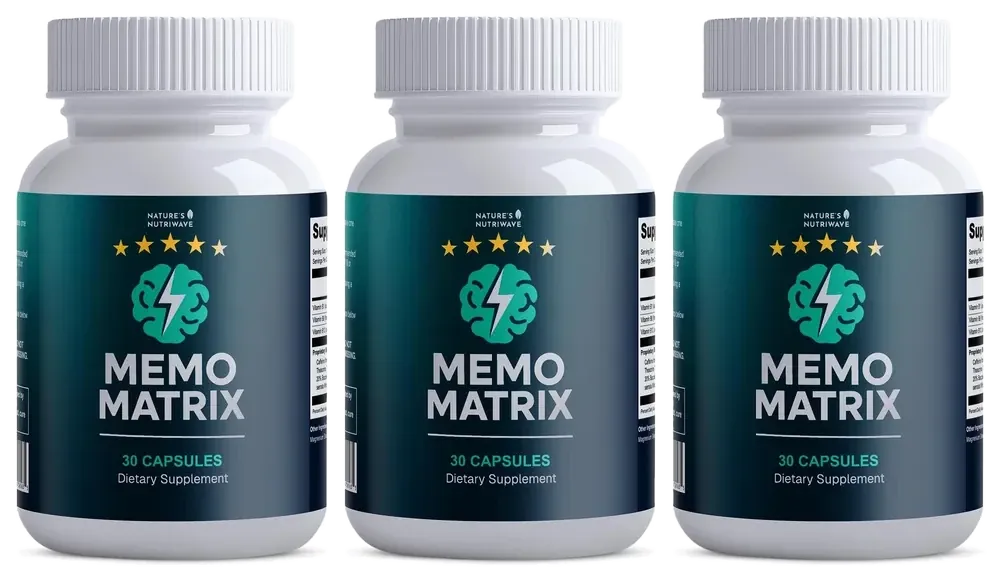
The hype lives in ads, not on the label. The label itself makes no memory claim. It shows five stars as design, the product name, the capsule count and the words Dietary Supplement. The memory promises appear on the sales page.
MalwareTips described ads around this name with hooks such as a golden honey recipe and a Harvard doctor reveal (MalwareTips, Memo Matrix Supplement: Real or Fake?). A hook like that adds heat to a product without adding evidence. The facts on the bottle are the cooler, more useful guide.
Our post on ad red flags shows how to check an ad against the label.
What four questions give you a fair verdict?
- Does the cost per day sit comfortably in your budget, with shipping included?
- Have you matched your panel and shown it to a pharmacist if you take medicine?
- Are you happy with limited evidence and a 60-day test with notes?
- Do you know the return rule that applies to your pack?
If you can answer yes to all four, a trial is a reasonable choice. If you answer no to any, fix that first. No one is forcing you, and the page has no timer.
What are the key facts on whether Memo Matrix is worth it?
- The price runs from about $1.63 to $2.97 a day before shipping.
- On the full label, bacopa is roughly two-thirds and L-theanine half of studied doses.
- No published trial covers the finished capsule.
- The 60-day guarantee limits money risk. The buyer pays return shipping.
- Three free digital guides come with 3 and 6 bottles. No price is listed.
- Medicine checks matter more than price for many adults.
Frequently asked questions
Is Memo Matrix worth it?
It may be for some adults who accept limited evidence. Weigh the price, the label doses, the risks and the 60-day guarantee. No study of the product exists.
Is Memo Matrix good?
We cannot call it good or bad. Its best-supported ingredient is bacopa, and the full label holds less than studies used.
Is Memo Matrix effective?
That has not been shown. No published trial of the finished capsule exists, and the sales page claims have no cited study.
How much does a 60-day try of Memo Matrix cost?
At the three-pack rate of about $1.97 a day, 60 days is roughly $118 of the $177 pack. Packs come in 30, 90 and 180 days.
Is Memo Matrix worth the hype?
The hype comes from ads. The label makes no memory claim, so judge the product by the Supplement Facts on your bottle.
Can I get my money back if it is not worth it?
The sales page prints a 60-day money-back promise. The buyer pays return shipping, and the two brand pages word the bottle rules differently.
Our view
Our view is calm and a little cautious. Memo Matrix is not a scam on the facts we have, but it is not proven either. The price is clear, the guarantee is a real safety net and the full label is easy to read.
What holds the score down is the gap between label doses and study doses, plus the lack of any product study. If you are curious, run a patient 60-day test, check your medicines first and stop if you feel unwell. If not, keep your money. Both choices are fine.
Last updated . Medically reviewed by Dr. Collin Liu, MD, Physician.