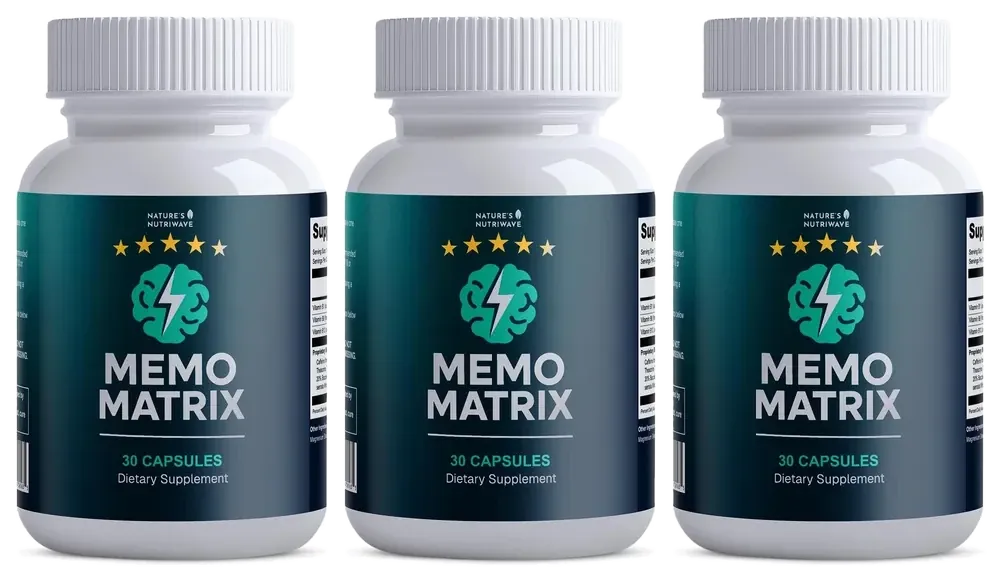
Lion's Mane Research Explained for MemoMatrix Shoppers
Quick answerLion's mane is an edible mushroom named on the MemoMatrix sales page, with no amount, and on neither Supplement Facts panel. The human study we rely on is a 41-person pilot trial in young adults. One test came out faster an hour after a dose, but word recall and working memory did not change. The authors advise caution.
- 60-day satisfaction window
- Free US shipping on 3 and 6 bottles
What is lion's mane, and where does it appear?
| Fact | Detail |
|---|---|
| Common name | Lion's mane mushroom |
| Latin name | Hericium erinaceus |
| Full label (REV.11/25) | Not listed |
| Second panel image | Not listed |
| Sales page list | Listed, no amount |
| Human study we cite | 41-person pilot trial in young adults (Docherty et al., 2023) |
| Memory result | No change in word recall or working memory (Docherty et al., 2023) |
A mushroom that looks like a white mane
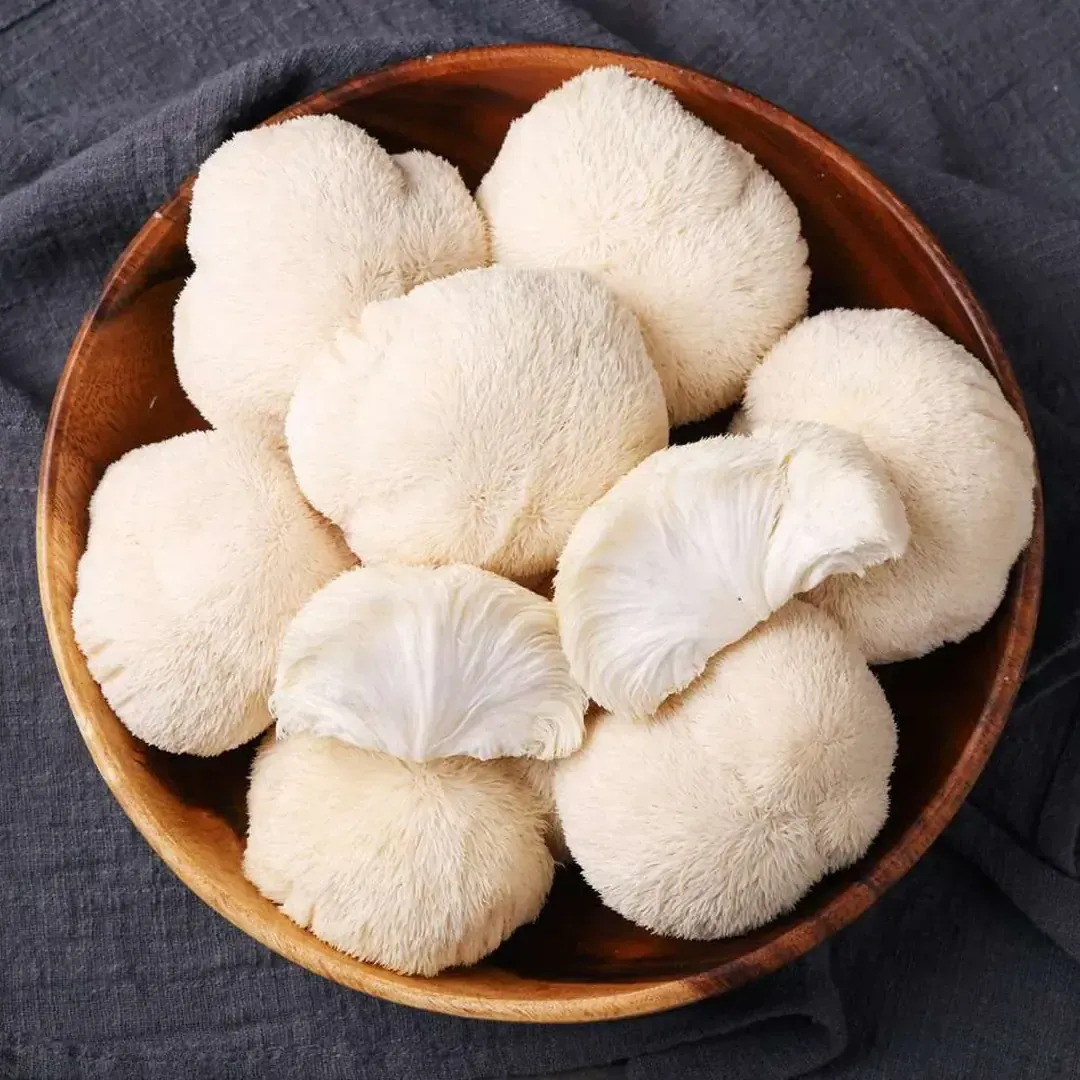
Lion's mane is an edible mushroom. It grows on hardwood trees and looks like a mass of soft white spines. Cooks use it fresh, and supplement makers dry and powder it.
It has a long history in East Asian cooking and folk use. Interest in it for focus and memory is much newer. Our lion's mane page has more on the mushroom itself.
Photo: lion's mane mushrooms in a bowl. Illustration of the whole mushroom, not the contents of a capsule.
What was the lion's mane pilot trial?
The study we rely on is small. Docherty and colleagues tested lion's mane in 41 young adults in 2023 (Docherty et al., 2023). They looked at effects after a single dose and after a longer course of daily use.
Each person took either lion's mane or a placebo, a dummy capsule with no active ingredient. Then everyone did a set of thinking tasks. They also answered questions on stress and mood.
- 41People in the pilot trial
- 1Test that came out faster
- 0Changes in word recall
The study was published in the journal Nutrients. It is a real, peer-reviewed trial. It is also, by the authors' own description, an early one.
What did the trial find, and what did it miss?
One result stood out. About an hour after a dose, people on lion's mane finished one test faster than people on placebo (Docherty et al., 2023). That is a speed result on one task.
Several other results did not move. Word recall, the closest thing in the study to everyday memory, showed no benefit. Working memory, the skill of holding a few facts in mind at once, showed no benefit either.
What the trial showed
- One task was completed faster about an hour after a dose
- Compared against a placebo group
- Published in a peer-reviewed journal
What it did not show
- No effect on word recall
- No effect on working memory
- Only 41 people, all young adults
- Authors advise caution in reading the results
Why does a pilot trial count for so little?
A pilot trial is a test run. Researchers use it to check that a study design works and to see whether a bigger trial is worth funding. It is not built to prove a benefit.
Small trials can produce a positive result by chance, especially when many tests are run. One faster result among several unchanged ones is a reason to study more. It is not a reason to expect better memory.
- Lab and animal work
Early ideas about how a compound might act. No proof for people.
- Pilot trial
A small human study, like the 41-person lion's mane trial. Checks design and gives first hints.
- Larger trials
Hundreds of people over months. Needed to confirm or rule out a benefit.
- Reviews of many trials
Pool results across studies. We have not reviewed any such pooled analysis for lion's mane and memory here.
Do results in young adults apply to older adults?
The volunteers were young adults. Most MemoMatrix shoppers are older, and many are worried about memory changes in themselves or a parent. Results in healthy young people may not apply to them.
Older brains, other medicines and existing memory problems all change the picture. The trial we cite did not test people like the typical buyer of a memory capsule.
When memory changes need a visit
Memory loss that disrupts daily life, gets lost in familiar places, or affects words and planning is a reason to see a doctor, not to buy a supplement first. A doctor can look for causes that are treatable, a B12 shortage or a drug reaction among them.
The National Institute on Aging explains which kinds of forgetfulness are part of normal aging (NIA, Memory problems and aging). The Alzheimer's Association lists ten early warning signs (Alzheimer's Association, 10 warning signs).
Why is the lion's mane amount in MemoMatrix unknown?
The sales page names lion's mane but gives no amount. Neither Supplement Facts panel we could read lists it at all. So nobody outside the maker can say how much, if any, is in a capsule.
That matters for three reasons. A study result only applies near the dose that was tested. A label line without a number cannot be compared with any study. And an ingredient missing from the panel may not be in the bottle.
| List | Lion's mane? | Amount |
|---|---|---|
| Full label (REV.11/25) | Not listed | None |
| Second panel image | Not listed | None |
| Sales page | Listed | Not given |
US rules require a supplement panel to show each ingredient, with its amount unless it sits in a named blend (21 CFR 101.36). The panel on the bottle is the document that counts. Our which formula page explains why three lists exist.
What should a lion's mane label line show?
If a future bottle does list lion's mane, a few details tell you what you are getting. The panel should give a weight in milligrams for that line. A blend total alone does not say how much of it is lion's mane.
Some products use the fruiting body, the part you would cook. Others use mycelium, the root-like threads, often grown on grain. A good label says which one, and whether it is a plain powder or an extract.
What a clear lion's mane line shows
- A milligram amount on the lion's mane line, not just a blend total
- The part used: fruiting body or mycelium
- Powder or extract, and the extract ratio if one is used
- A lot number and a best-by date on the bottle
Compare that with the study you are relying on. If the label does not give enough detail to match it, treat any study result as unrelated to the bottle.
Honest note: one small study is thin ground
The lion's mane evidence we reviewed is one small pilot trial with mostly null memory results. No study has tested MemoMatrix. The sales page memory claims have not been backed by a trial of the product.
NCCIH finds no direct proof that any supplement holds off dementia (NCCIH, Supplements for cognitive function). Nor does the FDA vet supplements for approval before they reach buyers (FDA, Q&A on Dietary Supplements). That leaves the choice to you, with the facts laid out plainly.
What should you ask before you buy?
Before ordering, a few direct questions can clear things up. Ask the seller in writing, and keep the reply with your order email.
Questions to ask before you buy
- Does the bottle you will ship list lion's mane on its Supplement Facts panel?
- If yes, how many milligrams per serving, and which part of the mushroom is used?
- Is the panel on the bottle the full label (REV.11/25), the 1-capsule panel, or another one?
- Can you send a photo of the panel on the current batch?
- Is my pharmacist aware of every supplement I take?
Our Supplement Facts page shows both panels as printed. Our side effects page covers cautions for each list.
Lion's mane research: common questions
What is Hericium erinaceus?
Lion's mane is an edible mushroom with long, shaggy white spines. Its Latin name is Hericium erinaceus, and it is sold as food and as a supplement.
Does lion's mane improve memory?
That has not been shown. In a 41-person pilot trial, lion's mane did not change word recall or working memory compared with placebo.
Which test improved in the Docherty lion's mane trial?
One test was completed faster about an hour after a dose. Other memory measures did not differ, and the authors called for caution and larger trials.
Does the MemoMatrix sales page say how much lion's mane it uses?
No amount is published. The sales page names lion's mane without a number, and neither Supplement Facts panel lists it.
Is lion's mane on the MemoMatrix label?
Not on the labels we could read. It appears only on the sales page list, so check whether the panel on your own bottle names it.
Who was in the lion's mane study?
Young adults, 41 people in total. Results in young, healthy people may not carry over to older adults with memory concerns.
What is a pilot trial?
A pilot trial is a small first study that tests whether a bigger one is worth doing. Its results are a starting point, not proof.
Is lion's mane safe to take?
It is eaten as food in many places, but supplement doses have little long-term safety data. Ask your doctor or pharmacist, especially if you take other medicines.
Can lion's mane replace memory medicine?
No. A supplement should never replace a prescribed treatment. Any change belongs to the prescriber.
Shopping for lion's mane? Read the MemoMatrix panel first
The full MemoMatrix label lists five ingredients with an amount on each line, and lion's mane is not one of them. Check the panel on your bottle before your first dose.