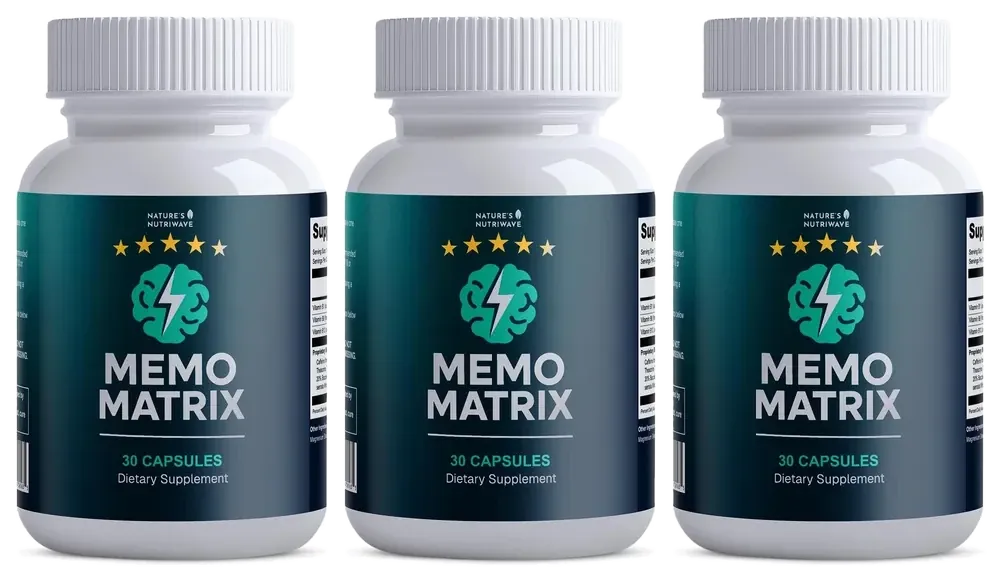
How Does Memo Matrix Compare With Other Memory Supplements?
Quick answerWe do not rank other brands. This guide gives you eight checks you can use on any memory supplement, then applies them to Memo Matrix. Its full label prints every amount, but some doses sit below studied levels, no product study exists, and two other lists share its name. No supplement is FDA approved.
Is there a best memory supplement?
We cannot name one, and we doubt anyone honestly can. NCCIH reports no direct proof that any supplement protects against dementia (NCCIH, Supplements for cognitive function). Products differ in ingredients, doses and quality. Studies test single ingredients in set groups, not every capsule on a shelf.
The FDA does not approve supplements before sale (FDA, Q&A on Dietary Supplements). That means a bottle can sit on a shelf with a bold front label and no review at all. So "best" lists are opinions. Some may be paid placements.
This post follows a different path. It does not name other brands, and it does not claim that Memo Matrix wins. It gives you a way to compare any two products on the same terms.
Do memory supplements really work?
Some single ingredients have limited evidence for narrow outcomes. Bacopa improved some recall tests after 12 weeks at 300 to 450 mg a day (Pase et al., 2012). One 200 mg dose of L-theanine sped up reaction time in a pooled review (Gerolymos et al., 2026). Many other ingredients show mixed results or none.
A finished capsule is not the same as its parts. A blend can act differently, and smaller doses may do less. So the honest answer to "do memory supplements work?" is that it depends on the ingredient, the dose, the person and the outcome you measure.
If you have "brain fog," the first stop is a doctor, not a shelf. The National Institute on Aging notes that some memory problems come from treatable causes, such as low B12 or a side effect of a drug (NIA, Memory problems and aging). A capsule cannot find those.
Which eight checks work on any memory supplement?
Use this list on any product, then on Memo Matrix. The right column shows how the full Memo Matrix label fares. Your own bottle may differ, since three lists share the name.
| Check | Why it matters | Memo Matrix |
|---|---|---|
| 1. Are all amounts printed? | A blend can hide how much of each item you get | Full label: yes. Second panel: no, seven items share 151 mg |
| 2. Do doses match the studies? | Research doses show what was tested | Bacopa roughly two-thirds and L-theanine half of studied doses |
| 3. Is there a study of the finished product? | Parts do not always add up | None published |
| 4. Is there a lab report for your lot? | It shows what is in the bottle | Not published. Reference codes only |
| 5. Are the claims backed? | The FTC asks for solid science (FTC, Health Products Compliance Guidance) | Sales page claims have no cited study |
| 6. Is the price clear? | Hidden fees sour trust | Clear pack prices. The $9.99 shipping on one bottle sits on the support page |
| 7. Is the refund clear? | You may need it | 60 days, but two pages word the bottle rules differently |
| 8. Are medicine warnings clear? | Interactions matter most for older adults | Label caution plus source-based interaction notes on this site |
Scores like these are not a ranking. They are a snapshot that you can repeat on any other product. A product that prints every amount and a lab report is easier to trust than one that does not.
How should you read an ingredient list?
Start with amounts. A name with no weight tells you only that a trace may be present. A name inside a proprietary blend tells you the total weight of all items, and nothing about each one.
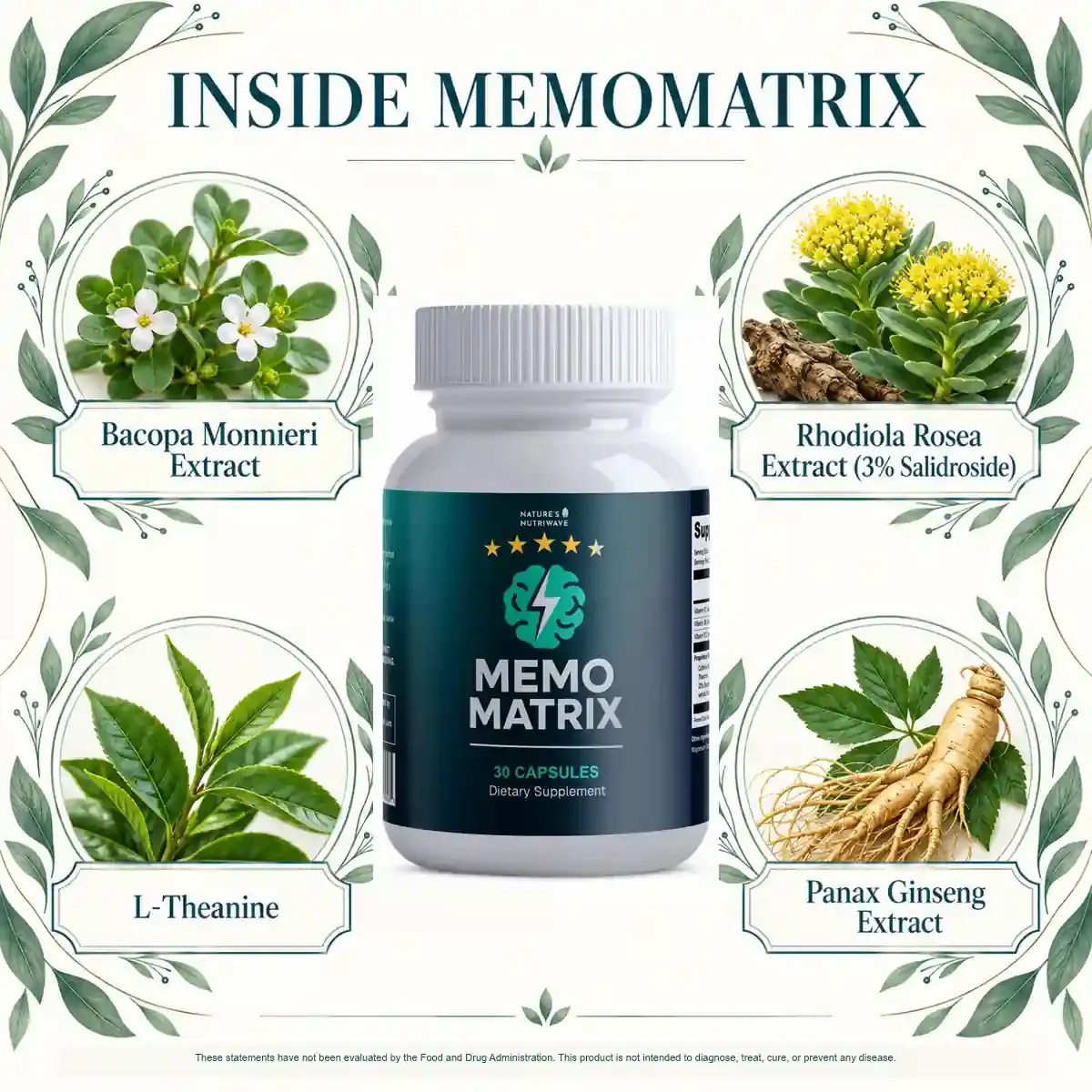
Then check the extract. "Bacopa" is not the same as a bacopa extract at a known strength. The full Memo Matrix label names rhodiola as standardized to 3% salidroside, but it prints no strength for bacopa. The second panel prints 20% bacosides for its bacopa, with no amount.
Finally, compare the dose with research. A table of label amounts beside study doses is the quickest way to see if a product is near the tested range. We did it for the full Memo Matrix label in our post on whether it is worth it.
How should you read a claim or an ad?
- Watch for "up to" numbers. They describe the most anyone might see. They do not describe what most people get.
- Ask who is speaking. A famous face or a "Harvard doctor" with no name you can check carries no weight.
- Look for a study you can open. If it is not named, assume it is not there.
- Be wary of a recipe hook or a secret trick that comes before the capsule pitch.
- Treat any cure or disease promise as a red flag. A supplement is not a treatment.
MalwareTips described ads around the Memo Matrix name that used hooks like these (MalwareTips, Memo Matrix Supplement: Real or Fake?). The same checks apply to every brand. Our post on ad red flags goes further.
Where does Memo Matrix do well, and where does it fall short?
Where it does well
- The full label prints every amount, so a doctor can read it.
- The pack prices are plain and show no fake list price.
- A 60-day money-back guarantee is printed on the sales page.
- Bacopa, the one herb on every list, has some human memory trials.
Where it falls short
- Three ingredient lists share one name.
- Some full-label doses sit below the studied range.
- No study of the finished product has been published.
- No lab certificate is published.
- Contact details differ across brand pages.
Weigh these against any other product on the same eight checks. If another product prints more, tests more and claims less, it earns more trust. That is the honest way to compare.
Are brain supplements safe?
Safety depends on the product, the dose and what else you take. Supplements do not need FDA approval before sale, so the work of checking falls on you and your pharmacist. Common trouble spots are memory drugs, blood thinners, antidepressants, blood pressure medicine and diabetes medicine.
The Memo Matrix label asks pregnant or nursing mothers, children under 18 and people with a known medical condition to consult a physician. That is good advice for any brain supplement.
Not FDA approved
MemoMatrix is a dietary supplement. It is not FDA approved, and no supplement is. It is not intended to diagnose, treat, cure, or prevent any disease. Take memory worries to a doctor.
What helps more than any supplement?
Daily habits carry the most weight, and they cost little. A steady bedtime and 7 to 9 hours of sleep help. Regular movement helps, and so does keeping blood pressure and blood sugar in range with prescribed medicine. A check of hearing and vision, time with friends and a new hobby also count.
Ask your doctor about medicines and B12 as well. None of these makes a headline, but together they do more than a capsule can. Our habits guide covers each one.
What are the key facts on comparing memory supplements?
- We rank no brands, and no supplement has proof of preventing dementia.
- Use the same eight checks on every product: amounts, doses, studies, lab report, claims, price, refund and medicine warnings.
- The full Memo Matrix label prints every amount. The second panel hides seven items in a 151 mg blend.
- Bacopa at 200 mg is roughly two-thirds of the lowest studied dose, and L-theanine at 100 mg is half.
- No study of the finished Memo Matrix capsule has been published.
- FDA does not approve supplements, and MemoMatrix is no exception.
Frequently asked questions
How does Memo Matrix compare with other memory supplements?
We rank no brands. Use eight checks on any product. On the full label, Memo Matrix prints every amount, but some doses sit below studied levels and no product study exists.
What is the best memory supplement?
We cannot name one. No supplement has direct proof of preventing dementia, and products differ in ingredients, doses and quality.
Do memory supplements really work?
It depends on the ingredient, the dose and the outcome. Bacopa and L-theanine have limited trial evidence for narrow tests. Many other ingredients show mixed or no results.
Are brain supplements safe?
Safety depends on the product, the dose and your medicines. Supplements are not approved by the FDA before sale, so read the label and ask a pharmacist.
Is Memo Matrix better than other products?
We cannot say. Compare any two products on the same checks: amounts, doses, studies, lab reports, claims, price, refund terms and medicine warnings.
What should I do about brain fog?
See a doctor first. Some causes, such as low B12 or a medicine side effect, can be found and treated.
Our view
We are not here to crown a winner. Memo Matrix has real strengths in its full label and its plain pricing, and real gaps in its doses, its missing studies and its three lists.
Our advice is to use the eight checks and let the answers decide. A product that is open about what it contains deserves more trust than one that is loud about what it does. Whichever bottle you choose, talk to your doctor first.
Last updated . Medically reviewed by Dr. Collin Liu, MD, Physician.